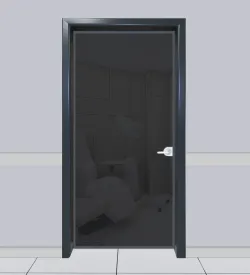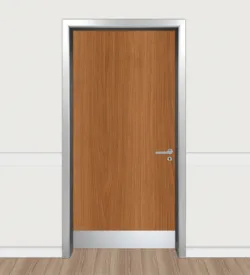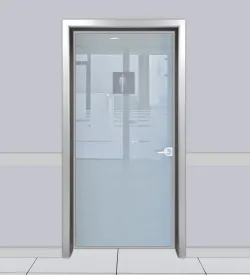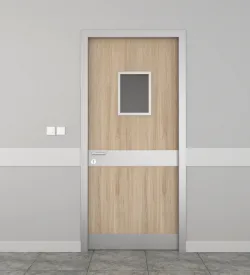
A door guillotine is one of the advanced under-door solutions used to enhance security, insulation, and hygiene standards in modern buildings. This system, preferred especially in hospitals, dormitories, school buildings, hotels, and areas requiring high fire resistance, descends towards the ground when the door closes, minimizing airflow, dust transfer, sound transmission, and smoke leakage. The mechanism, installed recessed under the door leaf, activates through a special pressure pin triggered when the door closes, creating a seamless seal with the surface.
One of the most significant contributions of under-door guillotines is their critical role in smoke and fire safety. They prevent the rapid spread of hot gases and smoke that could pass under the door during a fire, providing a substantial advantage for both personal safety and regional fire resistance. Additionally, in spaces where acoustic performance is a priority, they optimize sound insulation, increasing the overall dB rating of the door. A technically appropriate guillotine can provide acoustic protection levels ranging from 30 dB to 51 dB.
In healthcare facilities where hygiene requirements are stringent, these systems reduce the transfer of water, chemicals, or dust that could enter other rooms during cleaning. Thus, door guillotines play a vital role in infection control, sterile area separation, and climate efficiency.
This system also offers significant contributions to energy savings, particularly in buildings with high climate control costs, by preventing the escape of hot/cold air through the gap under the door, thereby enhancing HVAC efficiency. Guillotines that comply with building standards can be safely used in projects, manufactured in accordance with test standards such as TS EN 1634, TS EN 10140, and similar regulations.
With a recessed installation structure that does not disrupt aesthetic integrity and an automatic operation mechanism that provides long-lasting performance without maintenance, door guillotines have become an indispensable component in professional door systems. This product, which offers both technical performance and ease of use, is becoming standard in laminate doors, wooden doors, metal doors, and high-traffic passage areas today.

Technical Structure and Applications of Door Guillotine Systems
The door guillotine technology has become a critical component in modern door systems for both security and insulation. Especially under-door guillotine models create a high-performance seal by ensuring complete ground contact when the door closes. The recessed mechanism used in these systems does not compromise the aesthetic appearance of the door and provides a flawless integrity even in narrow frame constructions. Integrating the recessed profile into the door surface facilitates installation and creates a structure that is protected against impacts. Therefore, the preference for recessed guillotines is becoming widespread in both interior design projects and commercial areas requiring high traffic.
In buildings requiring fire and smoke control, certified guillotine models stand out. These products are designed to withstand flames, smoke, and hot gas passage for a specified duration, having been tested according to international standards such as TS EN 1634 and EN 13501-2. Minimizing smoke leakage from under the door is a vital necessity, especially in hospitals, dormitories, and hotel projects. A certified guillotine, demonstrating performance in line with the fire resistance class of the door, is often a mandatory equipment in project specifications.
For buildings where acoustic performance is crucial, insulated guillotine options are ideal for offices, conference rooms, laboratories, and educational institutions that require noise control. Thanks to high-density neoprene, silicone-based rubber, or multi-layered special seals, they can reduce sound transmission between the door and the floor by up to 60%. These types of insulated systems also assist in controlling dust, pests, and airflow. They play an effective role in reducing ventilation costs, thereby enhancing spatial climate efficiency.
In some projects, there is a need for sealing not only under the door but also at the top. At this point, over-door guillotine solutions come into play. Particularly in door openings with wide gap tolerances, these additional mechanisms integrated at the top of the door prevent airflow from passing through from above, achieving complete perimeter sealing when used in conjunction with the lower guillotine. Over-door systems are usually made of steel or aluminum bodies and can be produced in compatibility with fire-resistant doors.
As the areas of use and requirements increase, manufacturers have developed more functional, durable, and customizable guillotine solutions tailored to specific projects. Therefore, product groups include a wide variety of fire-resistant certified models, acoustic insulation-focused products, minimal designs with recessed mechanisms, and modules adaptable to different door thicknesses. The choice of door guillotine should be made carefully, as it directly affects air leakage, smoke sealing, sound levels, and heat loss.
Installation Methods for Door Guillotines
The installation phase is of great importance for the efficient operation of door guillotine systems. Under-door guillotine and over-door guillotine models can be applied either in specially opened slots on the door leaf or integrated into the surface. In recessed guillotine systems, the dimensions of the channel opened under the leaf must be prepared with millimeter precision, as the guillotine's seal pressure mechanism must contact the ground at the correct level when the door closes. The fixing screws used during installation should be suitable for aluminum profiles that prevent body deformation.
In certified guillotine models with an adjustable triggering pin, the contact point between the door frame and the mechanism must be positioned correctly at once. Otherwise, it may not be possible for the seal to apply equal pressure to the ground, rendering the smoke sealing test invalid. In some insulated guillotine models, it is expected that the rubber seal will adapt to the ground over a certain period after installation; therefore, tests should be conducted after a specific usage period following installation.
Maintenance and Usage Recommendations for Door Guillotines
Periodic checks are essential for the uninterrupted operation of guillotine systems for many years. Although the moving parts within the mechanism are generally self-lubricating, it is recommended to perform a general check once a year. Dust and small particles accumulating on the seal surface under the door can reduce pressure performance over time. Therefore, the surface of the under-door guillotine should be regularly wiped and cleaned with a dry cloth.
Since certified guillotine models undertake critical tasks, especially in fire doors, the deformation levels of the seals should be checked regularly. If there is excessive wear in the areas where the seal contacts the ground or if there is a delay when the mechanism closes, the triggering adjustment should be revised. In insulated guillotines, as acoustic performance is directly related to the structural integrity of the seal, if signs of cracking, crumbling, or jamming are observed, the seal should be replaced.
Choosing the Right Door Guillotine for Your Project
Not every structure and door type has the same needs. Therefore, when selecting a door guillotine, the type of project, traffic density, fire resistance, acoustic requirements, and door material should be carefully analyzed. For example:
- Hospital projects: Both smoke sealing and hygiene criteria should be considered when choosing under-door guillotines. The use of certified guillotines may be mandatory in sterile areas.
- Dormitories and student accommodations: Since noise is a significant factor, insulated guillotine models provide advantages.
- Hotel projects: Both acoustic performance and energy savings are prioritized; recessed guillotine models are also an aesthetically correct choice.
- Industrial areas: Adding over-door guillotines can provide complete perimeter sealing.
Door thickness, under-door gap level, floor type (ceramic, parquet, epoxy, etc.), and the opening direction of the door leaf are also determining technical criteria in the selection process.
Compatibility with Laminated Doors
Laminated doors are frequently preferred in spaces requiring high durability and hygienic surface structure. The combination of these doors with door guillotines is highly compatible, as the area where the recessed guillotine mechanism will be placed can be easily processed on CNC machines. The standard production of under-door gaps allows the guillotine mechanism to be integrated without damaging the door leaf. Additionally, the robustness of the laminated surface helps minimize errors that may occur during installation.
Especially the door models used by qualified manufacturers like Efor Laminat in projects are fully compatible with under-door guillotine and over-door guillotine systems. The impact-resistant form of the laminated structure supports the long-lasting operation of the mechanism.
Compliance with TS / EN Standards
The reliability of door guillotine products is documented by compliance with international standards. The most commonly used test standards are as follows:
- TS EN 1634-1: Covers fire resistance tests for doors. Certified guillotine models must demonstrate resistance to smoke and hot gas passage for the specified duration during this test.
- EN 13501-2: Defines how fire classification is to be performed.
- EN 10140 / ISO 10140: Used to measure the acoustic performance of door systems. The dB values of insulated guillotine models are verified with these tests.
- EN 15269: Specifies extended application standards for fire-resistant doors.
Door under guillotines, over guillotines, and recessed guillotine models produced in compliance with these standards provide significant advantages in meeting safety and insulation requirements in projects.
Product Comparison Table
| Guillotine Type | Application Area | Advantage | Technical Specifications | Suitable Door Types |
|---|---|---|---|---|
| Under-Door Guillotine | Hospitals, hotels, dormitories, offices | Prevention of smoke, dust, and sound | Automatic triggering mechanism, equal pressure on the ground | Laminate door, wooden door, steel door |
| Over-Door Guillotine | Industrial areas, places with intense airflow | Upper gap sealing | Surface mounting, adjustable pressure | Steel door, fire door |
| Certified Guillotine | All projects requiring fire resistance | Compliance with TS EN 1634, smoke control | Tested resistance to hot gas and flames | Fire door, technical room doors |
| Insulated Guillotine | Hotels, educational buildings, residential projects | Enhancing acoustic performance | Multi-layer seal, noise reduction between 30–51 dB | Laminate door, acoustic door |
| Recessed Guillotine | Aesthetic architectural projects | Hidden installation, invisible mechanism | CNC machining compatibility, impact-resistant body | All door types |
The topic discussed in this article is evaluated within the scope of the relevant product group. Technical solution options related to this subject are presented on the relevant product page, where visual application details can also be reviewed through video content.