
School Door Models, Classroom Door Prices
Educational institutions are areas with high human traffic, where elements like security, durability, and hygiene must be prioritized. Therefore, like all structural components used in schools, the selection of a school door should be approached with great care. A school door serves more than just as a passage; it must simultaneously fulfill multiple functions such as student safety, classroom privacy, fire resistance, and aesthetic integrity. High-quality, regulation-compliant, and long-lasting school doors are fundamental components of educational buildings from both architectural and functional perspectives.








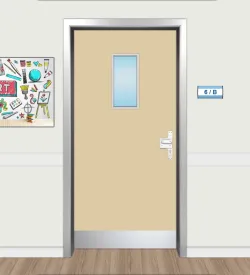
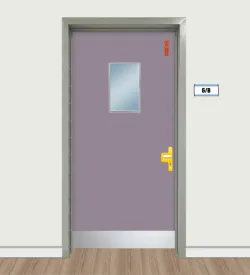

General Features of School Doors
School doors can be designed with various features for indoor and outdoor use in educational structures. These doors, suitable for different purposes such as classroom doors, laboratory doors, study room doors, restroom doors, principal's office, guidance services, and main entrance doors, can be manufactured with different equipment based on the environment's function.
1. Durable Material Structure
School doors are typically made of laminate coating, compact laminate, melamine-faced MDF, metal surface, aluminum frame, or steel systems with a wooden appearance. These materials exhibit high resistance to impact and scratches, maintaining their function for many years despite heavy use.
2. Fire Resistance
In compliance with fire safety regulations, fire-resistant doors may be used in schools. These doors prevent the passage of flames and smoke for a specified duration, allowing for the safe evacuation of students. School doors can be manufactured with varying resistance times, such as 30 minutes or 60 minutes, and must be certified according to fire door regulations.
3. Sound Insulation
In spaces like classrooms, teacher lounges, and administrative offices, it is undesirable for external noise to enter or internal noise to escape. Therefore, school doors can be produced with sound-proof insulation. Materials such as sound-absorbing particle boards or rock wool can be used as internal filling materials.
4. Easy Cleaning and Hygienic Surfaces
Hygiene is a critical factor in educational environments. Doors with laminate surfaces offer advantages in terms of aesthetic appearance and ease of cleaning. Thanks to their antibacterial surface coatings, they do not harbor germs and can be easily sanitized with detergents.
5. Safe Edge Details
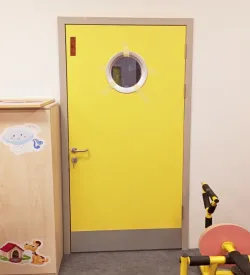
School doors should be manufactured with safe edge structures, especially for age groups like elementary and kindergarten students. Special door systems that prevent finger pinching, along with softened corners and edges, help protect students from harm.
Where Are School Doors Used?
- Classroom Doors: Impact-resistant, acoustic-featured, fire-resistant models
- Restroom and Lavatory Doors: Moisture-resistant, waterproof, antibacterial surfaces
- Corridor Doors: Wide passage, double-opening, glass-paneled control systems
- Laboratory and Workshop Doors: Special coatings resistant to chemicals and equipped with ventilation grilles
- Administrative Office Doors: A combination of prestigious appearance, acoustic insulation, and functionality
- Main Entrance Doors: Secure, lockable systems with wide openings
- Fire Escape Doors: Panic bar-equipped, certified, smoke-tight systems
Preferred Features for School Doors
The hardware used in school doors directly influences functionality and security. High-quality hinges, magnetic locking systems, specially designed door handles, and glass-partitioned models are among the most preferred details.
- Door Handle Selection: Ergonomic, easy-to-use models that are generally rounded for students
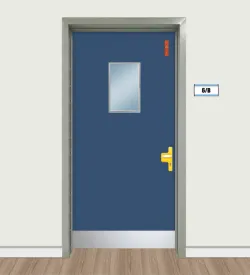
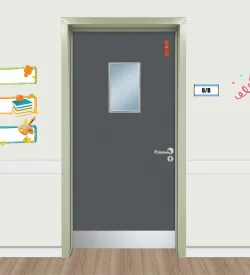
- Glass Windows: Tempered glass observation windows to allow monitoring from outside
- Panic Bars: Quick-opening mechanisms for emergency exits
- Quiet Closing Systems: Hinge and door spring systems that reduce noise
What to Consider When Choosing a School Door?
- Compliance with project and regulations
- Material selection based on the area of use (moist areas, fire doors, classrooms, etc.)
- Determination of acoustic and insulation needs
- Correct measurement of door dimensions and professional installation
- Aesthetic design compatibility with architecture
- Ensuring safety criteria (finger pinch prevention systems, etc.)
School doors are not just a passage element; they are also among the most essential components of schools in terms of student safety, classroom comfort, durability, and aesthetics. Durable, regulation-compliant, hygienic, and safe school doors are the building blocks of a healthy educational environment. Whether a new school building is being constructed or an existing school building is being renovated; with the right door selection, both aesthetics and functionality can be achieved simultaneously.


