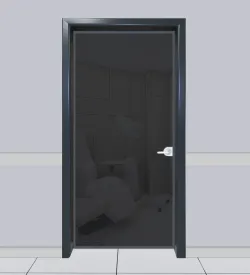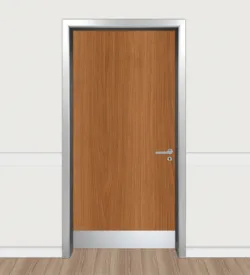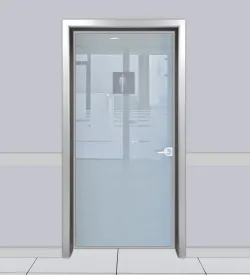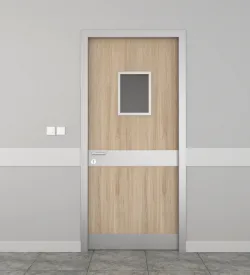
Educational buildings require specialized solutions due to high foot traffic, security needs, and expectations for long-term use. The school door systems used in these structures should not only be an aesthetic detail but also meet diverse needs such as security, durability, hygiene, and acoustic performance. Especially in educational institutions at various levels such as kindergartens, primary schools, high schools, and universities, the selection of doors for schools must be done meticulously, considering compliance with regulations and user safety. In this article, we will discuss what to pay attention to when choosing doors for educational buildings, the differences between classroom door models, and the advantages of specialized solutions like fire-resistant school doors.

Which Door Systems Should Be Preferred in Schools and Educational Buildings?
The door systems used in schools and educational buildings play a critical role not only in functionality but also in terms of security, durability, and longevity. In areas exposed to heavy foot traffic throughout the day, school door systems should be carefully selected for the health and safety of both students and staff.
Doors for educational buildings must meet far more than just aesthetic design requirements. Models that are resistant to impacts, easy to clean, compliant with fire regulations, and provide sound insulation should be preferred. In this context, durable school doors offer years of trouble-free use with surface coatings that exhibit high resistance to impacts and scratches.
When making door selections for schools, factors such as the building's purpose, the age group of students, and the level of traffic should be considered. In areas with younger age groups, such as kindergartens and primary schools, safety should be prioritized; systems with hinge protection and features that prevent finger pinching should be chosen. At this point, among classroom door models, options that provide sound insulation and can be produced according to special measurements stand out.
Fire safety is also a criterion that should not be overlooked in educational institutions. Fire-resistant school doors maintain their resistance to fire for a certain period, providing time during evacuation and enhancing safety. These doors are typically equipped with certified materials compliant with fire regulations.
Door systems for educational institutions should be planned not only for partitioning and passage but also to meet diverse needs such as security, acoustic insulation, hygiene, and fire resistance. With quality material selection and proper installation, maximum efficiency can be achieved in school projects.
Educational institutions are carefully planned structures that ensure students receive education in a safe, comfortable, and healthy environment. One of the important components of this planning is the correct selection of school door systems. So, which doors should be preferred in educational buildings? What technical features should be considered? Here are the details:
1. What Features Should Doors for Educational Buildings Have?
Doors for educational buildings must withstand much more load than ordinary residential doors. These systems, which are opened and closed repeatedly by hundreds of students throughout the day, should have:
- Impact resistance,
- Easy-to-clean surfaces,
- Manufacturing in accordance with fire and safety regulations,
- Sound insulation
These features should become standard.
2. How Should Door Selection for Schools Be Made?
Door selection for schools varies according to the type of building and the user group:
| Educational Area | Recommended Door Features |
|---|---|
| Kindergartens | Finger pinch prevention, hinge protection, PVC edge protection |
| Primary-Middle Schools | Laminated surface, impact-resistant, sound-insulated |
| High Schools | Fire-resistant, hygienic surface |
| Universities | Acoustic features, modern design, security lock systems |
Especially when choosing among classroom door models, technical criteria such as sound transmission resistance (Rw value) and hinge durability should not be overlooked.
3. Why Are Durable School Doors Important?
Durable school doors optimize labor by reducing maintenance continuity, not just in terms of cost. Coating materials resistant to scratches, impacts, and chemical cleaning agents (e.g., high-pressure laminate - HPL) are ideal for school environments.
Additionally, having impact-absorbing edge bands on the doors prevents deformations that may occur due to collisions.
4. Enhance Safety with Fire-Resistant School Doors
According to modern regulations, the use of fire-resistant school doors is mandatory in many school and dormitory structures. These types of doors typically:
- Offer fire resistance for 30, 60, or 90 minutes,
- Have seal systems that prevent heavy smoke leakage,
- Have undergone certified production and testing processes.
They allow for extended evacuation times during a fire, enabling students to exit safely.
5. Considerations When Selecting Door Systems for Educational Institutions
When selecting door systems for educational institutions, the following criteria should be considered:
- Material quality: Selection should be made according to needs among materials like MDF, steel, HPL, and composites.
- Lock systems: Lockable systems should be used in necessary areas.
- Hygiene: Antibacterial coatings and easy-to-clean surfaces should be preferred.
- Sound control: Insulated systems should be considered in areas where acoustic performance is desired.
- Climate impact: Durable materials resistant to moisture, heat, and cold should be used for exterior doors.
The physical infrastructure of a school directly affects the quality of education and the safety of students. Therefore, school door systems are not just an architectural detail but also a strategic investment. Both durable school doors and fire-resistant school doors can create modern structures compliant with regulations. Determining the right door system for you is a critical step for long-term performance and student safety.