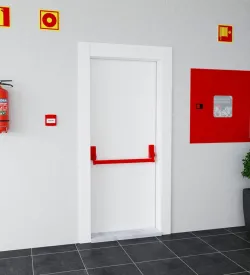
Quick-release mechanisms in fire exit doors are among the most critical elements for safe evacuation during emergencies. Designed to meet fire safety standards, these systems ensure fire exit doors open swiftly and smoothly. Integrated with fire door opening technology, emergency exit systems enhance the effectiveness of evacuation doors and play a vital role in implementing safety measures. Fast-opening doors are a key component of fire safety equipment, enabling occupants to exit buildings safely during a fire. This article provides an in-depth look at the technical design, operating principles, and fire safety significance of quick-release mechanisms used in fire exit doors.

Fire exit doors serve as lifesaving features during emergencies. Their ability to open quickly accelerates evacuation in panic and crowded situations during a fire. Quick-release mechanisms enable doors to open safely and effectively, playing a fundamental role in meeting fire safety standards. Therefore, the technologies used in the design and installation of fire exit doors are of great importance.
Developed in compliance with fire safety regulations, quick-release mechanisms are indispensable components of emergency exit systems. Advances in fire door opening technology have made these systems more functional and durable. The performance of fire evacuation doors directly depends on the quality and functionality of the mechanisms used.
Quick-Release Mechanisms in Fire Exit Doors
Technical Structure of Quick-Release Mechanisms
Quick-release mechanisms in fire exit doors are engineered to allow easy door opening during a fire. These typically include spring-loaded systems, hydraulic, or pneumatic-assisted opening mechanisms. Spring systems provide a defined force to open the door, enabling rapid operation in emergencies.
From a technical perspective, durability and reliability are paramount. Materials used must withstand high temperatures, and the mechanism must function effectively even under fire conditions. Therefore, these systems undergo regular testing and maintenance procedures.
Safety Measures for Emergency Doors
Emergency doors are critical for fire safety. Quick-release mechanisms ensure these doors comply with safety standards. Working in conjunction with locking systems, doors open only during emergencies to prevent unauthorized access.
Safety features are designed to prevent accidental opening and include alarm systems, emergency buttons, and automatic opening controls. These features enhance the effectiveness of fire evacuation doors and integrate seamlessly with safety equipment.
Innovations in Fire Door Opening Technology
Fire door opening technology is continuously evolving. Modern quick-release mechanisms are supported by electronic control systems and sensors. These systems enable automatic door opening upon fire detection, speeding up evacuation.
Innovative technologies include magnetic locks, electronic circuit controls, and remote monitoring capabilities. These advancements improve the efficiency of fire safety equipment and ensure the reliability of emergency exit systems.
Performance Criteria for Fire Evacuation Doors
The performance of fire evacuation doors is directly linked to the effectiveness of quick-release mechanisms. Factors such as opening speed, durability, and ease of use determine successful evacuation. Consequently, doors are tested against specific standards.
Performance criteria include opening force, opening speed, and heat resistance. Additionally, the door’s ability to re-lock after closing is assessed. These criteria guarantee compliance with fire safety regulations.
Maintenance and Testing Procedures for Quick-Release Doors
Regular maintenance of quick-release mechanisms in fire exit doors enhances system reliability. Maintenance involves cleaning moving parts, lubrication, and overall functional checks to ensure smooth operation during emergencies.
Testing measures door opening speed, lock functionality, and mechanism durability. Any issues identified during testing are promptly addressed to maintain optimal performance. These procedures are vital for sustaining the effectiveness of fire safety equipment.
Integration with Fire Safety Equipment
Quick-release mechanisms in fire exit doors work in harmony with other fire safety equipment. This integration coordinates with fire detection systems, sprinkler systems, and emergency lighting to facilitate safe evacuation.
Through integration, doors open automatically during a fire, enhancing evacuation route safety. These systems collectively maximize fire safety and improve the efficiency of emergency exit solutions.
Legal and Technical Standards for Quick-Release Mechanisms
Quick-release mechanisms used in fire exit doors must comply with various legal and technical standards. These standards ensure doors are safe, durable, and functional. Manufacturers and facility managers are required to use products that meet these criteria.
Standards define parameters such as opening force, fire resistance duration, and mechanism reliability. These regulations form the foundation of fire safety codes and ensure the effectiveness of emergency exit systems.
Quick-release mechanisms in fire exit doors play a crucial role in fire safety. Developed with advanced technical design, safety measures, and technological innovations, these systems provide secure evacuation during emergencies. Supported by regular maintenance and testing, they enhance fire evacuation door performance and integrate with fire safety equipment to deliver comprehensive protection.