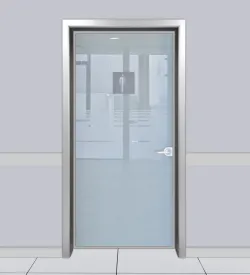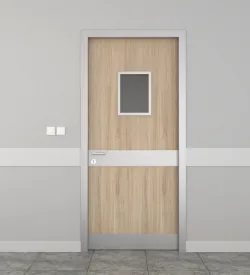
In healthcare institutions, hygiene is a fundamental factor that directly affects not only patient safety but also staff health and overall treatment quality. Therefore, every structural element used in hospitals, clinics, laboratories, and similar environments must fully comply with hygiene standards. Among these elements, door systems, which are a key component of transition areas, play a crucial role.
Hygienic door systems take on a critical role in the healthcare sector due to their surface properties that do not harbor bacteria, mold, or germs, their easy-to-clean structure, and high durability. Especially in operating rooms, intensive care units, isolation rooms, and sterile areas that require intensive disinfection, these types of doors have become an indispensable part of infection control.
Traditional door solutions can lead to the accumulation of microorganisms over time due to cracks, pores, or deformations that may develop on their surfaces. In contrast, hygienic doors are typically manufactured using special materials such as antibacterial laminate, HPL (High Pressure Laminate), stainless steel, or PVC coating. This not only facilitates cleaning processes but also offers a long-lasting and healthy usage option.
Moreover, doors used in healthcare facilities must meet various technical features, not only in terms of hygiene but also fire resistance, impact resistance, resistance to chemical cleaning agents, and impermeability. In this introductory article, we will thoroughly discuss what hygienic door systems are, why they should be preferred, and in which healthcare areas they are used.

The Intersection of Hygiene and Architecture in Healthcare: Door Systems
The physical infrastructure of a healthcare facility should be designed to ensure the continuity of hygiene and supported by a sustainable cleaning process. Hygienic door systems come into play at this point, merging architectural and medical needs. Every detail, from surface coating to hinge systems, should be designed with infection control in mind.
Key Features of Hygienic Doors
The technical features that distinguish hygienic door systems from other types of doors include:
- Antibacterial Surfaces: The special materials used on the surfaces of the doors (HPL, compact laminate, PVC coating, stainless steel) do not allow for the formation of bacteria and fungi.
- Seamless and Non-Porous Structure: Non-microbial, liquid-impermeable flat surfaces facilitate cleaning processes.
- Chemical Resistance: Frequently disinfected surfaces do not experience color fading, surface swelling, or deformation.
- Impact and Wear Resistance: Provides long-term trouble-free use in high-traffic areas.
- Compatibility with Automatic Door Systems: Allows for contactless passage, reducing the risk of cross-contamination.
Choosing Hygienic Doors Based on Usage Areas
Hygienic door systems are not used at the same standard in every healthcare institution. Selecting the appropriate door according to the area’s needs and risk level is vital.
Operating Rooms and Intensive Care Units: Their impermeable structure supports clean room standards.
Laboratories: Surfaces that are resistant to chemicals are used.
Patient Rooms: Easy-to-clean, aesthetic, and durable surfaces are preferred.
Toilets and Wet Areas: Require special body systems that are water-resistant and do not swell.
Efor Laminat Hygienic Door Systems
Efor Laminat offers hospital door models that meet all the technical and hygienic standards required by the healthcare sector. The products feature antibacterial surfaces and include:
- HPL and compact laminate coatings,
- Aluminum and sheet metal frame system options,
- Fire-resistant model alternatives,
- Quiet opening and closing mechanisms designed for ease of use.
Operating Rooms and Intensive Care Units
In these areas, impermeability and air-tightness are the most important criteria. Special air-tight doors or automatic sliding doors are generally preferred.
Laboratories and Clean Rooms
In these sections, where the likelihood of contact with chemical substances is high, the surface must be chemically resistant. Antistatic properties are also preferred in these environments.
Patient Rooms and Outpatient Clinics
Although these areas are of lower risk, easy-to-clean and scratch-resistant door surfaces are still necessary. PVC edge-banded, antibacterial laminate doors are commonly used.
High-Traffic Areas (Corridors, Waiting Rooms)
Here, durability is paramount. Doors are expected to be resistant to impact, not damage the coating underneath, and not deform the door frame.
Why is Material Selection Important?
The material used in hygienic doors determines the overall performance of the door. Below are the main coating and body materials preferred in healthcare facilities:
| Material Type | Advantages | Application Area |
|---|---|---|
| Compact Laminate | Water-resistant, antibacterial, scratch-proof | Toilet areas, laboratories |
| HPL Laminate | High impact resistance, various colors and patterns | Outpatient clinics, patient rooms |
| PVC Coating | Cost-effective, easy to clean, does not harbor microorganisms | High-traffic areas |
| Stainless Steel | Highest hygiene standard, fire resistance | Operating rooms, sterile rooms |
Regulations Regarding Door Systems in Healthcare Institutions
In Turkey, door systems for healthcare structures are regulated under laws such as Ministry of Health of the Republic of Turkey, ISO 14644-1 Clean Room Standards, TS EN 16034, and fire resistance. Particularly for sterile areas, documents proving impermeability, fire resistance, and chemical resistance are crucial. According to fire regulations in hospitals, fire-resistant hygienic doors are mandatory in certain sections.
Why Choose Hygienic Doors Over Standard Doors?
- Minimizes infection risk
- Facilitates cleaning, saving time
- Reduces cross-contamination by minimizing staff contact
- Enhances the institution's hygiene and safety perception
- Durability reduces long-term maintenance costs
Hygiene in Healthcare Starts with the Details
Hygienic door systems create an unseen yet significant line of defense in healthcare institutions. Proper door selection, appropriate material usage, and installation according to technical standards directly affect the overall hygiene level of the institution. These systems, which have become an integral part of modern healthcare architecture, should be regarded not just as a structural element but as a measure that protects patient safety.