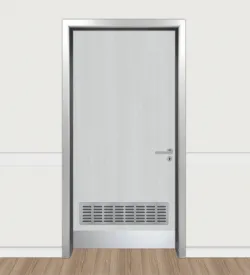
How Are Fire-Resistant Doors Tested and Certified?
Fire-resistant doors are one of the most critical components of fire safety in buildings. These doors help prevent the spread of flames and smoke during a fire, facilitating safe evacuation and fire control. However, for a door to effectively perform this function, it must be tested and certified according to international standards. Tests, indicated by classifications such as EI30, EI60, EI90, demonstrate the door's fire resistance over a specified duration. The tests are conducted in accredited laboratories by exposing the doors to high temperatures, and the results are formalized with a door certification, fire resistance certificate, or CE/TSE certificates. This process is crucial for meeting legal requirements and ensuring user safety.

1. Introduction: The Importance of Fire-Resistant Doors
Fire-resistant doors are essential for fire safety in buildings. They protect both human lives and property by preventing the spread of smoke and flames during a fire. Fire-resistant doors are mandatory in various structures, from hospitals and schools to shopping centers and residential projects. However, to determine whether these doors are genuinely durable, they must undergo specific tests and certification.
A door that has not obtained a fire resistance certificate may fail to function correctly in the slightest risk. Therefore, the testing and certification process for doors is conducted with great diligence.
2. Applicable Standards for Fire-Resistant Doors
The testing and certification of doors are carried out in accordance with international standards. Commonly applied standards include:
- EN 1634-1: Specifies fire resistance testing procedures according to European standards.
- ISO 3008: International fire resistance testing standards.
- TS EN 1634: The fire testing standard applicable in Turkey, compliant with EN standards.
These standards measure the door's resistance to fire over a specified duration (integrity, insulation, smoke tightness).
3. Fire Resistance Classes: EI30, EI60, EI90, EI120
Fire resistance is expressed with EI.
- E (Integrity): Indicates how long the door maintains its integrity against fire.
- I (Insulation): Specifies the duration for which the door can provide insulation without causing a temperature increase on the opposite side.
Fire door classifications include:
- EI30: 30 minutes of fire resistance,
- EI60: 60 minutes,
- EI90: 90 minutes,
- EI120: 120 minutes, maintaining both integrity and insulation.
These classifications are assigned based on test reports and specified in certifications.
4. Fire Door Testing Process
Specific procedures are followed when testing fire-resistant doors. The testing process is conducted in independent and accredited laboratories.
4.1. Sample Preparation
- The manufacturer prepares door samples in standard or actual sizes for testing.
- The door frame, hinges, locking system, and all accessories are tested.
- The sample is installed in accordance with the mounting instructions for the wall opening to be tested.
4.2. Furnace Test (Fire Resistance Test)
The fundamental stage of the fire test involves exposing the door to high temperatures in a specialized furnace.
- The furnace provides a temperature increase according to a standard curve (e.g., 576°C in 5 minutes, 842°C in 30 minutes, 945°C in 60 minutes).
- Throughout the test, the door's integrity and insulation performance are monitored.
- Factors such as cracking, deformation, flame transfer, and smoke leakage are recorded.
4.3. Measurement and Monitoring
- The surface temperature of the door is measured with thermocouples.
- Sensors placed at critical points on the door record whether the temperature increase exceeds specified limits.
- Special smoke generators may also be used during the test for smoke tightness.
4.4. Test Termination
- The test is terminated when the door loses its integrity, flames pass to the other side, or temperature limits are exceeded.
- The duration for which the door provides fire protection is recorded in minutes.
5. Evaluation of Test Results
After the test is completed, the laboratory prepares a test report. The report includes:
- The fire resistance duration of the door (EI30, EI60, EI90, etc.),
- The materials used,
- Installation details,
- Test dates,
- The standards used.
This report forms the basis of the certification process.
6. Fire Resistance Certificate and Certification Process
Fire-resistant doors receive a fire resistance certificate or door certification as a result of testing. These documents include:
- CE Certificate: Mandatory for sales in the European market. The CE mark indicates that the door complies with EN standards.
- TSE Certificate: Indicates compliance with national standards in Turkey.
- EI Certificates: Certifications indicating the fire resistance class (EI30, EI60, EI90, EI120).
The certification process typically involves the following steps:
- The manufacturer applies to an accredited testing center.
- Samples are prepared and tested.
- If successful results are obtained, the certificate is issued.
- The production process is audited for the validity of the certificate, and annual checks may be conducted.
7. The Importance of Documentation for Fire Doors
Fire resistance certificates are not only a legal requirement but also a guarantee for user safety.
- Building permits and inspections require documentation.
- Insurance companies may not compensate for damages in the absence of certificates.
- Certified products are preferred for customer trust.
- In projects, certified doors such as EI60 or EI90 are included in specifications.
8. The Product Sold Must Match the Tested Door
The certification is only valid for the tested model. If the manufacturer makes changes to the door, retesting may be required.
- Changing the material thickness,
- Using a different type of glass,
- Adding a new hinge or locking system may invalidate the certification.
Therefore, both the manufacturer and the user must ensure that the installed and used model matches the certified one.
9. Technical Criteria Considered in Fire Resistance Testing
- Heat transfer limit: The temperature increase on the other side of the door should not exceed an average of 140°C, nor any point exceed 180°C.
- Integrity: There should be no flame transfer.
- Smoke tightness: Smoke transfer should not be allowed during a fire.
- Closing mechanism: The door should close and lock by itself during a fire.
- Frame and seals: Should not deform during testing.
10. Challenges in Documenting Fire-Resistant Doors
- The testing process can be quite costly.
- Each country may have different additional requirements.
- Even small deviations in the production line can affect testing success.
- High-performance doors in the EI120 class are heavier and more expensive.
11. Where Are EI30, EI60, EI90 Doors Used?
| Application Area | Minimum Required Certification |
|---|---|
| Residential apartment entrances | EI30 |
| Office building stair exits | EI60 |
| Hospitals and hotels | EI90 |
| Industrial facilities | EI120 |
This classification ensures the correct selection of doors in projects.
12. The Foundation of Safety is Proper Testing and Certification
Fire-resistant doors provide safety not only through their appearance but also through test reports and certifications. The fire door testing conducted in accredited laboratories simulates real conditions to show how the door behaves during a fire. Doors that pass the test successfully are certified with documents such as EI30, EI60, EI90, EI120. These documents are indispensable for legal compliance and life safety.
While certification may be costly for manufacturers, it ensures safety in the market. For users, certified doors can save lives during a fire.