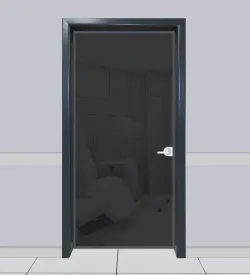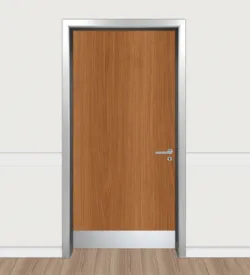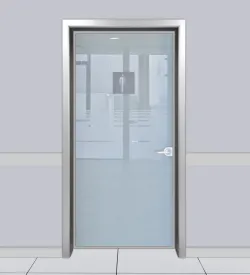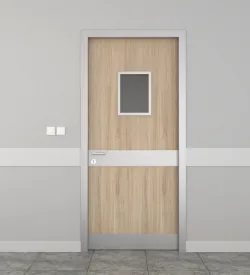
Bathrooms and WC areas are among the most challenging environments in both residential and commercial buildings. The reason is not only that they are “wet zones”, but also that these spaces expose doors to multiple stress factors at the same time. Constant humidity, sudden temperature changes, hot steam after showers, chemical cleaning products, and heavy daily use all create conditions that can quickly damage a poorly chosen door. This is why selecting a bathroom door is very different from choosing a door for a living room, bedroom, or office space.
One of the most common questions people ask during renovation or construction projects is:
“Can laminate doors be used for bathrooms and toilets?”
The short answer is: Yes — laminate doors can be used in bathrooms/WCs, as long as the correct technical specifications are applied.
However, the real answer is more detailed, because in wet environments the door’s performance depends on several combined elements such as the core structure, edge sealing, frame material, installation quality, and ventilation.
In this article, you will find a complete and practical explanation of whether laminate doors are suitable for wet areas, what technical factors determine durability, and how to choose the best bathroom/WC door for long-term use.

Why Bathroom & WC Door Selection Matters More Than Other Areas
A bathroom door is continuously exposed to risks that other interior doors rarely face. These risks include:
- High humidity for long periods, especially after hot showers
- Direct water splashes, especially in compact bathrooms
- Steam penetration, which often leads to internal condensation
- Chemical cleaners, such as bleach and strong detergents
- Swelling and deformation, if the inner structure absorbs moisture
Because of these factors, the most important question is not “Does the door look good?”, but rather:
Can this door remain stable for years in a humid, high-use environment?
What Is a Laminate Door and Why It’s Considered for Wet Areas
A laminate door is an interior door system where the surface is reinforced with a durable decorative laminate layer. In the market, laminate surfaces typically fall into two main categories:
- HPL (High Pressure Laminate)
- CPL (Continuous Pressure Laminate)
Both types can perform well when manufactured and applied correctly. However, in wet environments like bathrooms, HPL laminate is generally the superior choice because it is produced under higher pressure and temperature, resulting in a harder, more resistant surface.
The key advantage is this: laminate works like a protective barrier. It helps shield the door surface from:
- moisture
- steam
- scratches
- chemical cleaning effects
- daily wear and tear
Are Laminate Doors Water-Resistant?
This is where many misunderstandings happen, so it’s crucial to clarify:
*The laminate surface itself is water-resistant.
*But the door structure is not automatically waterproof unless it is engineered for wet-area conditions.
That means even with a high-quality laminate surface, a bathroom door can still fail if the door’s edges and internal core are not protected properly.
For wet areas, the door’s overall durability depends on three main technical components:
- Door core / internal filling
- Edge sealing & bonding quality
- Door frame (casing) material + correct installation
If any of these factors are weak, the most common result is swelling, edge separation, and deformation—usually starting from the lower corners.
Advantages of Laminate Doors for Bathrooms and WCs
Laminate doors are frequently used in wet areas, especially in commercial spaces, because of their long-term performance benefits.
Better Stability Against Humidity
Unlike painted doors, laminate surfaces absorb less moisture and allow fewer surface distortions. This significantly reduces the risk of:
- surface bubbling
- waviness
- discoloration
- deformation due to humidity
High Scratch and Impact Resistance
Bathroom and WC doors—especially in offices, cafés, restaurants, schools, and public buildings—face more impact and friction than typical interior doors. Laminate surfaces are well-known for their resistance to:
- scratches
- dents
- daily abrasion
Easy Cleaning and Hygiene Benefits
Laminate surfaces are relatively non-porous. This means:
- less dirt absorption
- faster cleaning
- better resistance against common cleaning products
It is one of the most practical choices when hygiene and maintenance are priorities.
Long-Lasting Visual Quality
Laminate doors are available in many decorative options such as:
- wood textures
- solid colors
- concrete / industrial patterns
The surface keeps its appearance for years with minimal fading.
Potential Disadvantages (And Why They Usually Happen)
Laminate doors are not “problem-free by default”. Most issues occur because of incorrect product selection or weak manufacturing quality.
Low-Quality Laminate Can Be Misleading
In some cases, products marketed as “laminate doors” may use low-grade surface layers not suitable for wet areas. This leads to user complaints such as:
“The laminate door swelled—so laminate must be bad for bathrooms.”
In reality, the issue is not laminate itself. The real problem is poor internal construction and edge protection.
Weak Edge Sealing Can Cause Swelling
The most vulnerable point of any bathroom door is the edge zone. If edge sealing and bonding are not strong enough, moisture will penetrate the internal core and cause damage.
Wrong Frame Material Can Ruin a Good Door
Even if the door leaf is high quality, a poorly selected frame may swell or deform, causing:
- friction when opening/closing
- misalignment
- long-term structural issues
The Most Important Technical Factors for Wet-Area Door Performance
If you want a bathroom/WC laminate door that lasts for years without problems, focus on these technical details:
1) Will Water Touch the Bottom Edge?
In small bathrooms, shower water may reach the door area. In such cases, attention must be given to:
- correct door-bottom clearance
- proper sealing
- installation positioning to minimize water exposure
The bottom edge is typically the first point where swelling begins if protection is weak.
2) What Type of Door Core Is Used?
Laminate doors can be manufactured with different inner structures, such as:
- honeycomb filling (lighter, but not always the best for wet stability)
- MDF-based cores / reinforced structures (stronger and
- special frames (aluminum structure solutions for high-demand projects)
For hotels, hospitals, dormitories, and high-traffic public spaces, the inner structure of the door is a major durability factor.
3) Edge Banding Quality Is Critical
In wet areas, the laminate surface is not the weak point — edges are.
A door must have strong, properly bonded edge banding that:
- does not separate at corners
- does not allow water migration
- remains stable under cleaning and humidity stress
If edge banding fails, moisture quickly damages the core.
4) Frame Choice: MDF Frame vs Aluminum Frame
In bathrooms and WCs, frame selection is often as important as the door itself.
- MDF frames can be used only if manufacturing and installation quality are high, but they carry higher risk in continuous humidity.
- Aluminum frames are the most stable choice for wet areas, especially in commercial applications.
- Steel/sheet-metal frames are also suitable for durability-focused projects.
For places like hotels, malls, office WCs, an aluminum-framed laminate door system is a highly reliable solution.
5) Ventilation Is a Hidden but Crucial Factor
Even the best bathroom door can fail if ventilation is poor. If there is:
- no exhaust fan
- no window ventilation
- constant steam buildup
then moisture levels will remain high for long periods, increasing the risk of door deformation.
Proper ventilation reduces both:
- steam penetration
- long-term humidity accumulation
Laminate Door vs PVC Door for Bathrooms: Which Is Better?
This comparison is common, so let’s evaluate it clearly.
- PVC doors may appear more water-friendly, but they can suffer from yellowing, lower scratch resistance, and weaker impact durability.
- Laminate doors offer a more premium appearance, stronger surface durability, and better long-term stability—provided the correct technical specifications are used.
A practical summary would be:
If the goal is a low-budget short-term solution, PVC may work.
If the goal is long-term durability + modern appearance, laminate is usually the better option.
How to Choose the Best Laminate Door for Bathroom/WC Use
To ensure the door performs well in a wet environment, look for these combined features:
- High-quality laminate surface (preferably HPL)
- Strong edge banding (water migration resistant)
- Moisture-tolerant door core structure
- Correct frame choice (aluminum / steel recommended for high humidity)
- Professional installation + proper sealants
If these requirements are met, a laminate door can easily become one of the best bathroom/WC solutions in terms of durability, hygiene, and design.
Can Laminate Doors Be Used in Wet Areas?
Yes — laminate doors can absolutely be used in wet areas like bathrooms and WCs, and when correctly selected they perform extremely well.
But the most important detail is this:
The success of a bathroom door depends not only on the surface material, but on the entire door system’s wet-area compatibility.
If you want a door that combines modern design, durability, and easy cleaning, laminate doors—especially those designed with proper edge protection and suitable frames—are a strong choice for both residential and commercial projects.