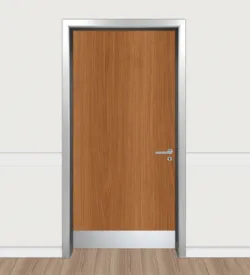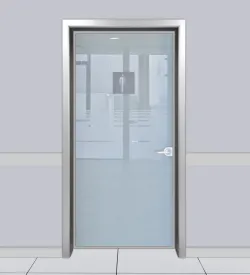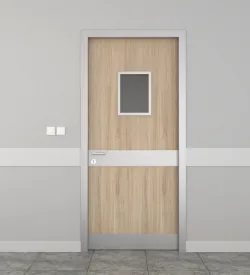
Aluminum framed door systems have become one of the most preferred solutions in the construction industry in recent years, offering both durability and a modern appearance. When used together with MDF door leaves, these systems provide aesthetic integrity and significantly enhance the lifespan of the door. The combination of MDF's homogeneous structure and the structural stability of aluminum results in high performance in both residential and commercial spaces.

Structural Features of MDF Door Leaves
MDF (Medium Density Fiberboard) is a special type of panel made by compressing fine wood fibers under high pressure. The main reasons for choosing this material as a door leaf include:
- Smooth surface form: Ideal substrate for paint, PVC, or laminate finishes.
- Acoustic performance: Reduces sound transmission due to its dense structure.
- Impact resistance: More stable than solid wood during humidity changes.
- Suitability for modular production: Easily adaptable to different designs due to CNC processing.
These features make MDF door leaves indispensable in modern door systems. However, the structural superiority of the leaf alone is not sufficient; the frame must also be made from suitable materials.
Technical Approach in Aluminum Framed Door Systems
Aluminum frames provide high mechanical strength, especially for areas with heavy traffic. The metal structure offers significant advantages against impacts and deformations. When technically examined, aluminum frames:
- Profile thickness and rigidity class ensure long-lasting use.
- Maintain their shape under static and dynamic loads.
- Corrosion-resistant structure makes them suitable for hygiene-sensitive areas like bathrooms, hospitals, and laboratories.
- Allow millimeter tolerances during installation, facilitating compatibility with MDF leaves.
Key Points of Compatibility Between MDF Door Leaves and Aluminum Frames
For these two materials to work harmoniously, certain technical requirements become crucial:
1. Measurement Precision
There must be an optimal tolerance between the exact dimensions of the door leaf and the internal opening of the aluminum frame. Typically, a 3–5 mm gap is left, which plays a critical role in the proper closing of the door.
2. Hinge and Lock Compatibility
While hinge pockets in aluminum frames are prepared with CNC-supported cutting, they must be fully compatible with the hinge model used on the MDF leaf. When hydraulic or 3D adjustable hinges are preferred, fine adjustments after installation become easier. Ensuring that lock counterparts are suitable for aluminum profiles contributes to sealing and sound insulation.
3. Finish Compatibility
MDF leaves with laminate, PVC, or lacquer finishes achieve a more elegant appearance when they harmonize with the surface color of the aluminum frame. Therefore, color matching can be done using RAL codes.
4. Insulation Performance
The seal systems placed inside aluminum frames minimize sound and air leakage by making full contact with the smooth surface of the MDF leaf. Additionally, high-quality seals support the soft closing of the door.
Applications
These compatible systems are particularly preferred in the following areas:
- Hospitals and clinics (hygiene and durability requirements)
- Schools, dormitories, and public buildings
- Hotels and commercial enterprises
- Office projects
- High humidity environments (due to aluminum's corrosion resistance)
A Strong Combination for Modern Structures
The combination of MDF door leaves with aluminum framed door systems offers a robust solution in terms of durability and aesthetics for modern architectural projects. High technical performance, low maintenance requirements, and long-lasting use make this structure desirable. After ensuring the correct dimensions, selecting appropriate accessories, and professional installation, the performance of the door system reaches its maximum level.
1. In-Depth Look at Laminate Door Leaves + Aluminum Frame Compatibility
This section presents an SEO-focused architectural approach that progresses in an explanatory and fluid style rather than in bullet points.
MDF door leaves with laminate surfaces are a preferred solution, especially in high-traffic areas. Thanks to the laminate surface's high resistance to scratches, long-term stability is achieved in both residential and corporate projects. When this surface structure combines with the metallic structure of aluminum frames, a cohesive design is formed. Since the aluminum profile maintains its shape over the years, issues such as warping or swelling of the door leaf are avoided. When considering the thermal stability of the laminate surface alongside aluminum's low thermal expansion coefficient, a stable working arrangement between the door leaf and the frame is achieved. This compatibility provides a significant advantage, especially in hotel corridors, hospital rooms, and school classrooms with high circulation.
Laminate door surfaces can be produced in various patterns, while aluminum frames can be adapted to the project with anodized, powder-coated, or RAL-coded special colors. This matching supports a homogeneous appearance in architectural projects. Additionally, in terms of surface cleanliness, the laminate and aluminum combination is known for its ease of maintenance. In areas where hygiene standards are mandatory, it provides resistance against detergents, disinfectants, and the chemical effects caused by heavy usage.
???? 2. Sheet Frame vs. Aluminum Frame Comparison
This section is entirely based on a comparison table and is structurally different from previous explanations.
| Feature | Sheet Frame | Aluminum Frame |
|---|---|---|
| Material Structure | Steel-based profile | Lightweight aluminum alloy |
| Weight | Heavier | Much lighter |
| Ease of Installation | Requires more skilled experience | Installation process is more flexible |
| Corrosion Resistance | Prone to rust | Naturally corrosion-resistant |
| Design Diversity | Generally limited | High variety in color, form, and profile |
| Maintenance Requirements | Higher need for painting and maintenance | Requires minimal maintenance |
| Acoustic Performance | Varies based on filling structure | High performance with sealing system |
| Application Area | Industrial and economic projects | Modern, hygienic, and high-end projects |
Evaluation
When paired with MDF door leaves, aluminum frames offer a higher quality solution in terms of aesthetics and stability. While sheet frames may be more economical, they may not reach the performance level that aluminum provides due to long-term maintenance costs and the likelihood of deformation. Aluminum frames have become a preferred choice in hospital, hotel, and school projects, supporting high efficiency when paired with laminate door leaves through visual integrity and reliable operation.
???? 3. Special System Analysis for Hospital Applications
This section employs a technical-focused structure with detailed explanations.
♦ Hygiene Standards
The surfaces of MDF door leaves used in hospitals are typically covered with antibacterial laminate. This surface withstands chemical exposure for many years without deterioration. Combined with the pore-free structure of aluminum frames, the overall hygiene level of the door system is elevated.
♦ Impact Resistance
In hospital corridors, stretchers, wheelchairs, and medical equipment frequently bump against door edges. Therefore, the impact resistance of the frame is crucial. Thanks to the high elastic modulus of aluminum profiles, they maintain their shape against impacts. The supported skeleton system embedded within the MDF leaf also enhances its resistance to impacts.
♦ Fire Safety
Fire-resistant MDF leaves are preferred in hospital projects. These leaves are certified in specific classes. Aluminum frames behave more stably against heat and flame spread. When used with fire seals, the door system can provide protection for certain durations.
♦ Sound Insulation
In hospitals, sound insulation is critical for privacy and patient comfort. The density of the MDF door leaf, combined with a double sealing system installed in the aluminum frame, significantly reduces sound transfer between rooms.
♦ Antibacterial Features
Lock counterparts, hinges, and door handle areas can be paired with accessories suitable for hygiene standards. Since aluminum frames do not rust, surface deterioration is avoided, making it easier to maintain cleanliness.