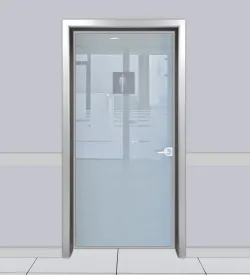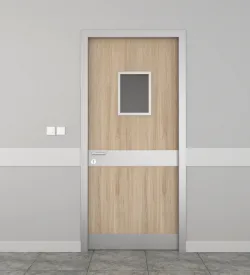
In today's construction technologies, alongside aesthetic designs, durability, fire safety, and modular installation ease are also coming to the forefront. At this point, the frame structure, one of the most critical components of door systems, holds significant importance both functionally and visually. Traditional wooden or metal frames are being replaced by aluminum door frames that are much lighter, longer-lasting, and resistant to deformation. Especially in high-traffic environments such as schools, hospitals, hotels, and offices, aluminum-framed systems are preferred due to their technical advantages.
Aluminum frame systems are not only lightweight; they also feature corrosion resistance, easy installation, fire resistance, non-deformability, and adjustable compatibility with wall structures, making them an indispensable part of modern projects. Additionally, their compatibility with various door leaf materials such as laminate, compact, and MDF provides great freedom in architectural design. In this article, we will explore many details from the technical structure of aluminum-framed door systems to their areas of use, installation methods, and the security advantages they offer.
Aluminum Frame Technology in Door Systems
Advancing construction technologies and modern architectural understanding are guiding industry professionals seeking both durable and aesthetic solutions towards more functional systems. In this context, the frame structures, which are the backbone of door systems, play a significant role in the overall safety and appearance of buildings. Especially in recent years, aluminum-framed door systems have gained a wide range of applications thanks to the countless technical advantages they offer, emerging as an alternative to classic wooden or metal frames.
Aluminum is considered an effective solution material not only for exterior elements but also for interior door systems due to its lightweight, durability, corrosion resistance, and architectural compatibility. Particularly in commercial buildings, public institutions, and project-specific applications, the practicality, ease of installation, and long-lasting usage advantages provided by aluminum-framed systems are decisive factors.
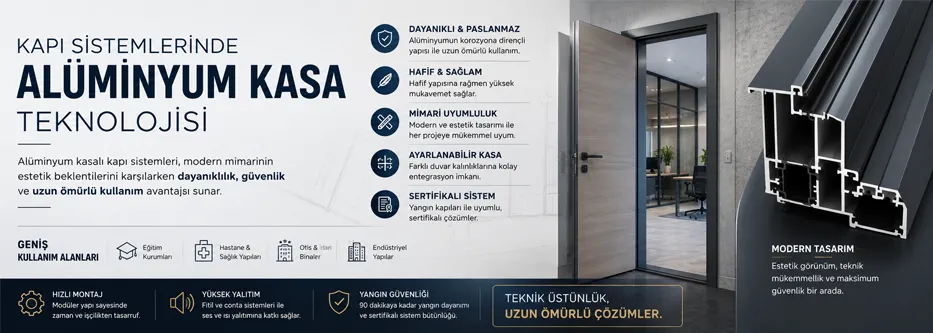
Key Features of Aluminum Door Frames
Aluminum frames serve as both structural supports and aesthetically complete the connection of the door leaf to the wall. The prominent technical features of aluminum door frames can be listed as follows:
- Corrosion-Resistant Material: Thanks to aluminum's rust-resistant structure, it can be safely used even in humid and variable weather conditions.
- Lightweight and Strong: Despite being much lighter than wooden or metal frames, it exhibits high strength.
- Aesthetic Appearance: Provides visual integrity in architectural projects with its modern, simple, and clean lines.
- Adjustable Structure Option: Can be easily integrated with different wall thicknesses thanks to adjustable frame options.
- Fire-Certified Usage: Can be used in conjunction with fire-resistant door leaves and can be part of certified systems.
Compatible Door Types
Aluminum-framed systems provide full compatibility with door leaves covered with different surface materials. The most commonly used door types include:
- Laminated Doors: Frequently preferred in areas where hygiene and impact resistance are important, such as offices, schools, and hospitals.
- Compact Doors: Fully compatible with compact laminate surface doors preferred in wet areas such as restrooms, showers, and changing rooms.
- MDF Doors: Provides aesthetic integrity with MDF leaves commonly found in hotel and residential projects.
- Fire Doors: Can ensure certified system integrity when used with door leaves that carry fire resistance certificates.
Application Areas of Aluminum Frames
The flexible structure of aluminum door frames makes them an ideal solution for many sectors. The main areas of use include:
1. Educational Institutions
Considering the high traffic in schools and universities, systems that are impact-resistant, maintenance-free, and aesthetically pleasing are preferred. Aluminum-framed laminated doors fully meet these needs.
2. Hospitals and Healthcare Facilities
Antibacterial surface door systems, essential for hygienic environments, are transformed into fully integrated solutions when supported by aluminum frames. Easy cleanability and liquid resistance are the most important criteria here.
3. Hotel Projects
Aluminum frames compatible with MDF door leaves provide advantages in terms of both fire safety and design. Especially in fire-certified hotel doors, system integrity is of critical importance.
4. Administrative Buildings and Offices
Offers stylish and durable solutions suitable for corporate identity. Provides savings in time and labor due to ease of installation.
5. Industrial Buildings and Factories
Aluminum frame systems that can adapt to challenging working conditions offer long-term solutions by minimizing the risk of deformation.
Advantages of Aluminum Frame Installation
The installation process in door systems is significant in terms of both time and labor costs. Aluminum frames provide important advantages in this regard:
- Modular Installation: Shows compatibility with different wall thicknesses thanks to its adjustable frame structure.
- Quick Installation: Can be installed quickly due to its lightweight and pre-manufactured structure.
- Surface-Friendly Application: Can be installed without damaging the wall, making it suitable for post-renovation use.
- Technical Compatibility: Contributes to sound and thermal insulation when supported by seals and gaskets.
Fire Safety and Certification
In areas such as hotels, public buildings, and healthcare facilities, the use of fire-resistant door systems is mandatory. When used in conjunction with fire-certified door leaves, aluminum-framed doors offer the following advantages:
- Fire resistance of up to 90 minutes
- Seal systems that prevent heavy smoke passage
- Necessary technical documents for certified system integrity
Aesthetic and Color Options
Visual harmony is paramount in modern architecture. Aluminum frames offer a wide range of color options through electrostatic powder coating or anodizing. This creates an aesthetic integrity between the door leaf, wall, and other building components. If desired, natural appearances can also be achieved with wood-patterned coating options.
What to Consider When Choosing Aluminum-Framed Door Systems?
- Wall Thickness Compatibility: Decide whether to use an adjustable frame or a fixed frame based on the wall structure.
- Door Leaf Compatibility: Pay attention to the technical compatibility with door types such as MDF, compact, and laminate.
- Certification Documents: Request documents such as fire resistance and hygiene certificates.
- Profile Thickness and Extrusion Quality: The quality of aluminum profiles is important for long-lasting use.
- Ease of Installation and Service Support: Technical support and ease of application will be comfortable in the long run.
Conclusion: A New Standard in Modern Door Systems
Aluminum-framed door systems offer more than classic solutions, bringing together aesthetics, durability, and functionality in today’s buildings. With advantages such as lightweight, longevity, fire resistance, and modular installation, these systems guarantee not only architectural aesthetics but also technical integrity. Whether for offices, healthcare facilities, or residential projects, aluminum frame technology sets a new standard in door systems.